KUBE
UX DESIGN • USER RESEARCH
Designing for Autism Spectrum Disorder.
Kube is a sensory toy created for autistic children to overcome anxiety through collaborative play. This project was developed at UC Berkeley in Technology Design Foundations, co-instructed by Adam Hutz and Vivek Rao. Kube won the Best in Showcase award at Jacob Institute’s Winter Showcase in Dec ‘21, and the Innovation Catalyst grant in Jan’ 22.
Overview.
Team.
Kaila Negron, Qianyi Chen, Tania O’Neill, Berk Dincer, Jacob Kritzinger
Skills.
Contextual Inquiry, Storyboarding, Rapid Prototyping, A/B Testing
Role.
Research
Interaction Design
Duration.
8 weeks (Oct. - Dec. 2021)
Problem.
Autistic children often play solitarily, whereas cooperative play can be more difficult to engage in organically. Cooperative play may cause anxiety in many instances.
-

Parent
“My son’s anger is difficult to control, and the methods his therapist suggest doesn’t always make it easier to help him feel better.”
-
Child
“Sometimes when I’m angry I like to sit on the blue couch alone. I just like to be by myself.”
-

Physician
Autism affects the development of important skills needed for play like sharing objects and attention with others, respond to others, and take turns.
-

Health Journalist
I didn’t have any stimming techniques. I doodle flowers when I felt stressed, talked with my friend, and played with my pet. These helped me to take a break.
Insight and Goals.
-
For autistic children, playing is a more intuitive means of communication and organic interaction. To inspire autistic children that struggle socially to be more engaged, we might consider crafting an experience that encourages behaviors that already come natural.
-
Sensory devices and physical movement can be a soothing outlet for stress. Textured surfaces provided relief to individuals that stim, while swings and soft mats provide children comfort when they need an outlet.
-
Considering existing behavioral therapy frameworks, a core goal for our intervention is to reframe behavioral patterns through positive reinforcement.
PROBLEM FRAMING
How might we create an opportunity for autistic children to overcome anxiety through play?
Ideation.
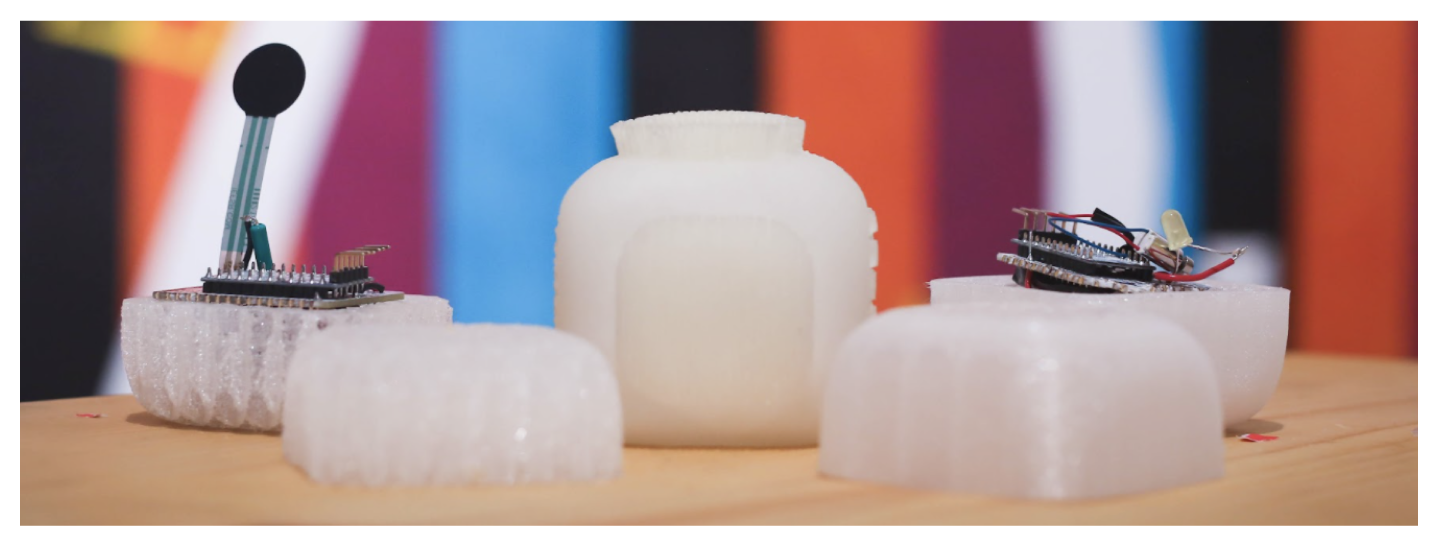
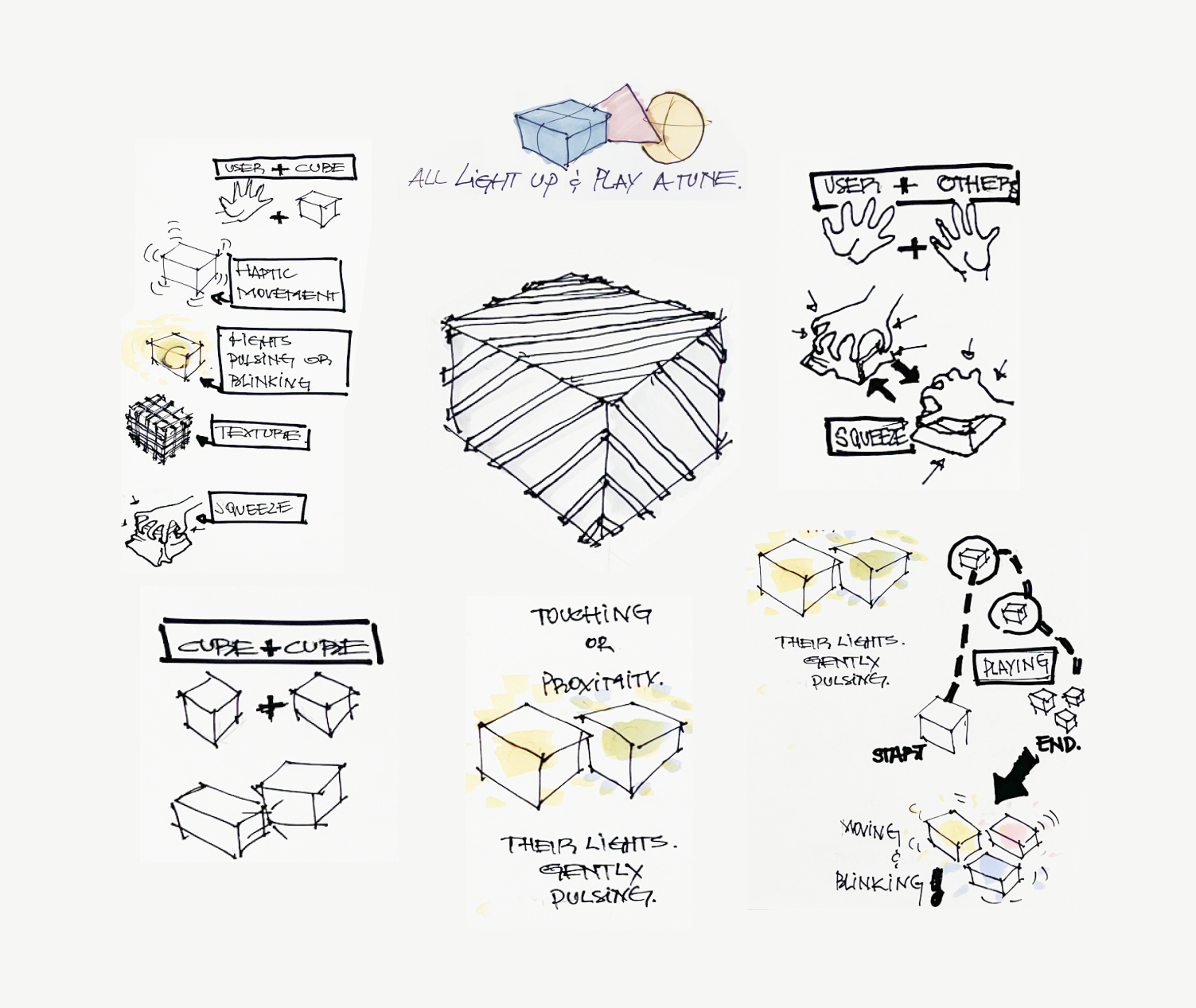
Our team sketched possible form and interaction. Through our brainstorming process, our team sought to create a squishy, textured form that would encourage play between children.
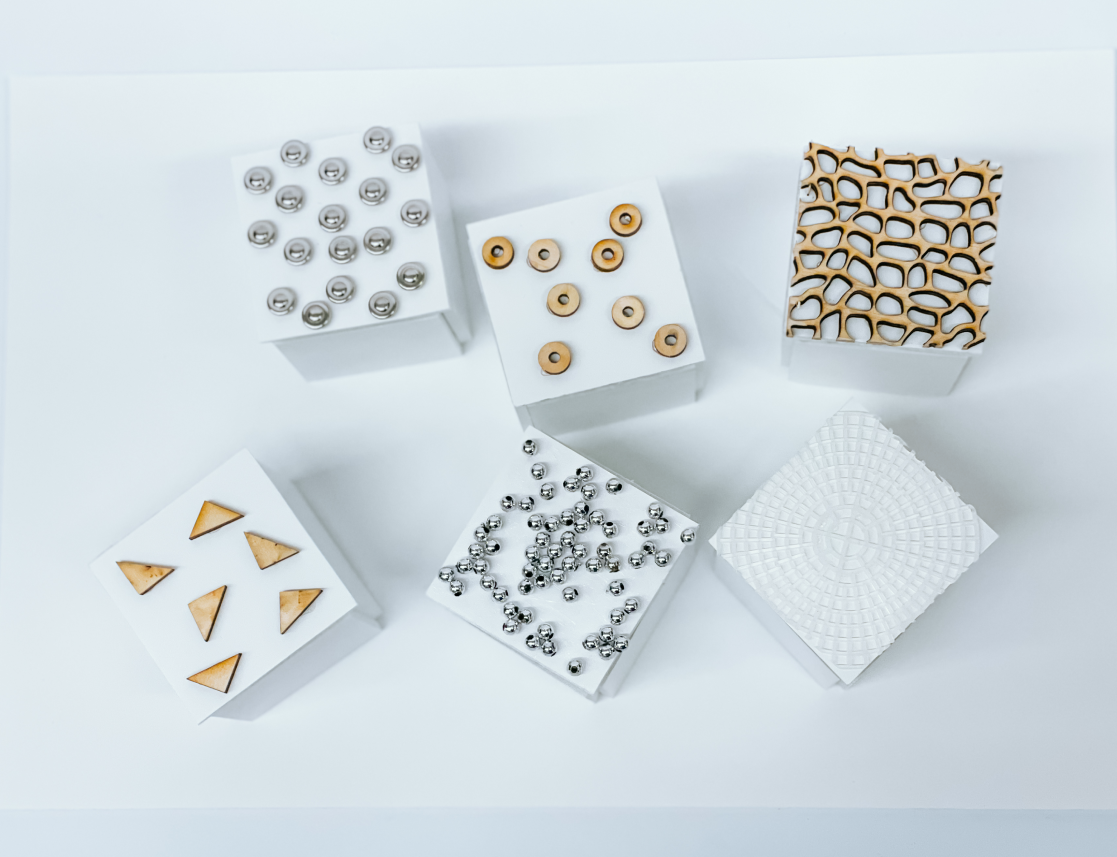
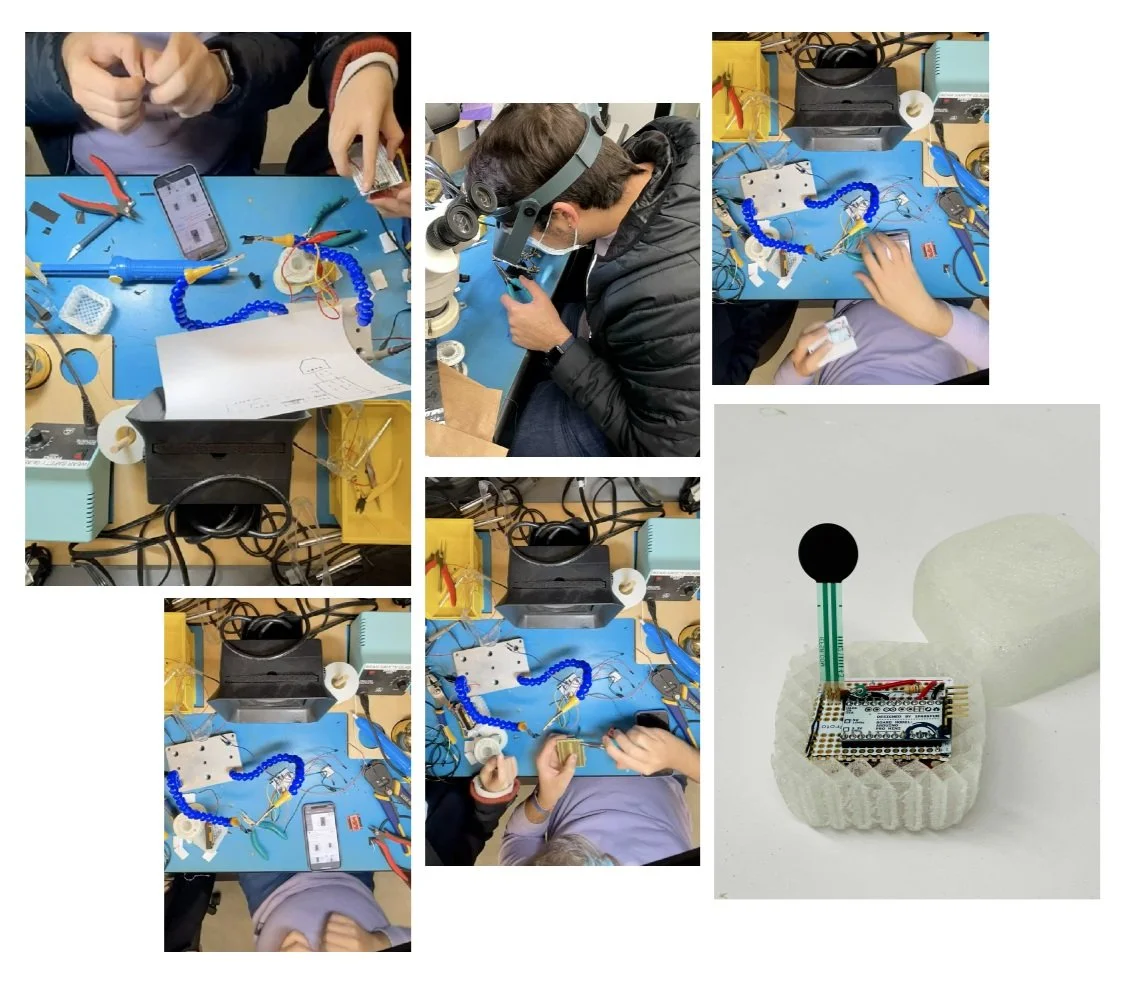
Prototyped with foam core and makerspace scraps. We experimented with varying tactile experiences using different textures on the top of the cubes.
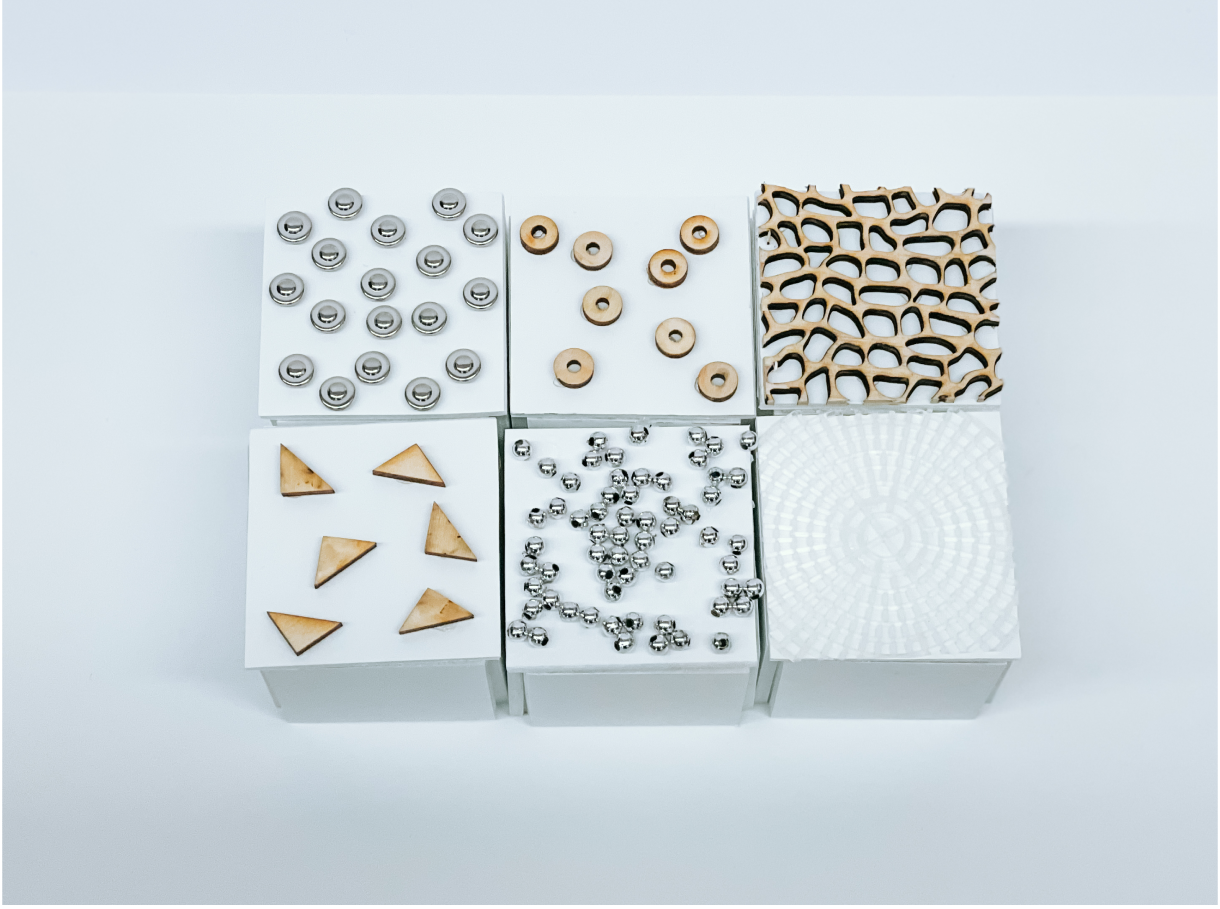
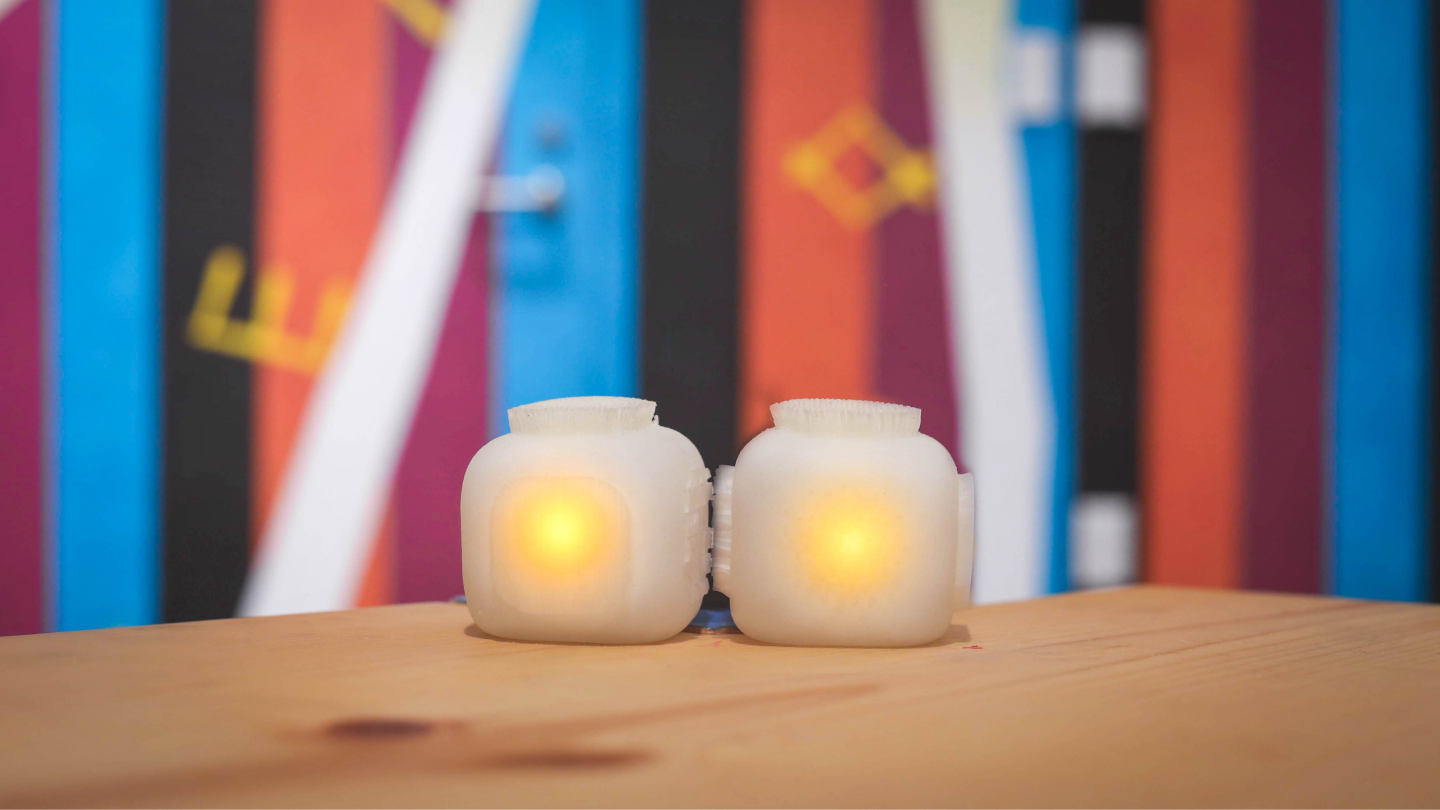
Textures.
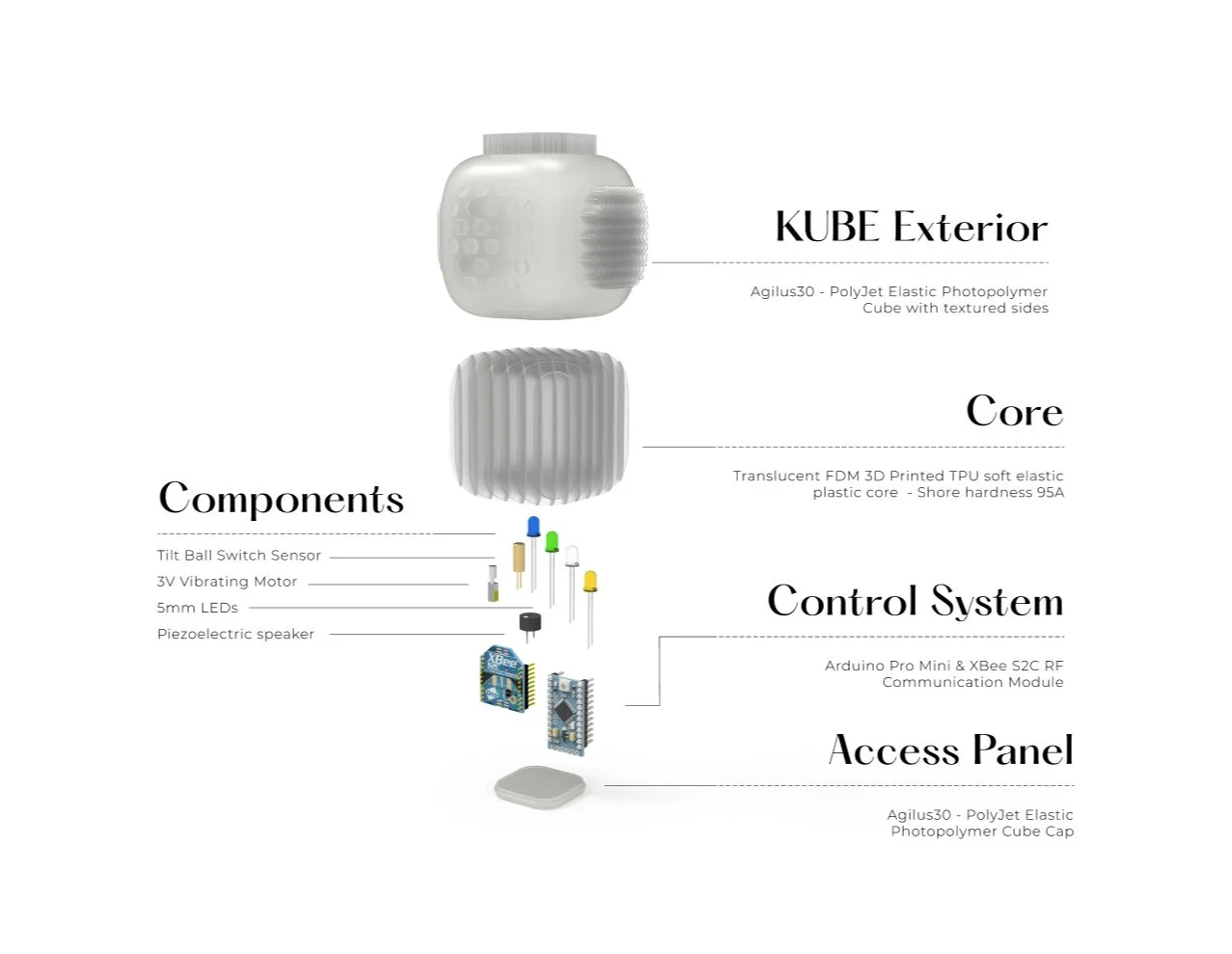
Our group considered how creating pronounced textures could encourage repetitive action as an outlet for self stimulatory behavior. On each surface of KUBE, we modeled textures that we hypothesized would attract autistic children to hold and squeeze the toy.
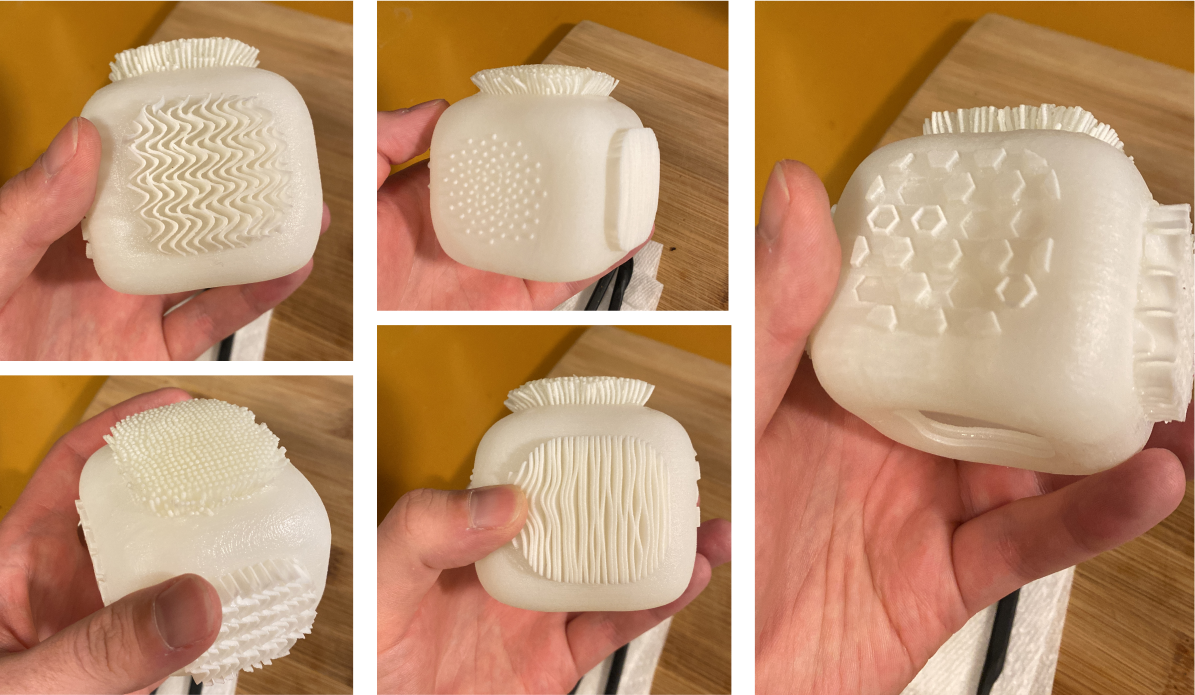
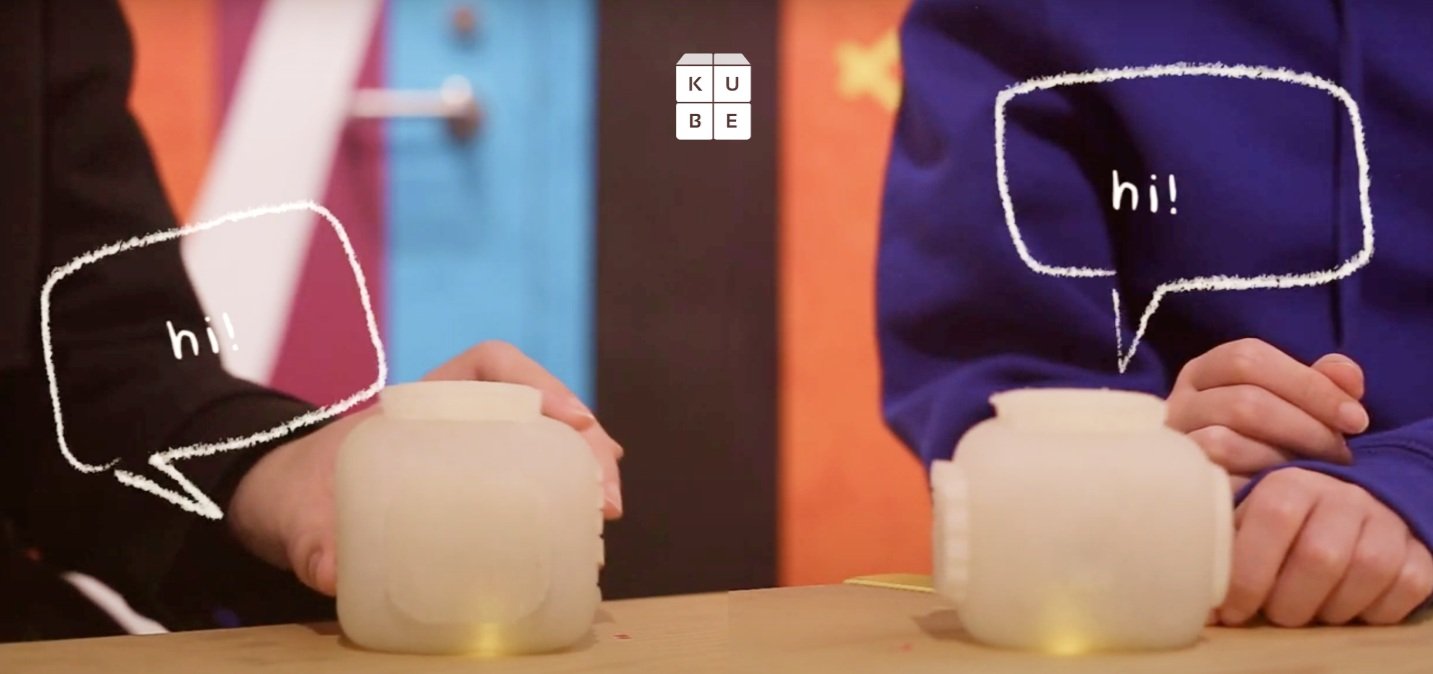
As we developed our prototype, a key consideration was how children would interact with it. We considered both individual and cooperative play, how children might engage with others without making eye contact.
Interaction.
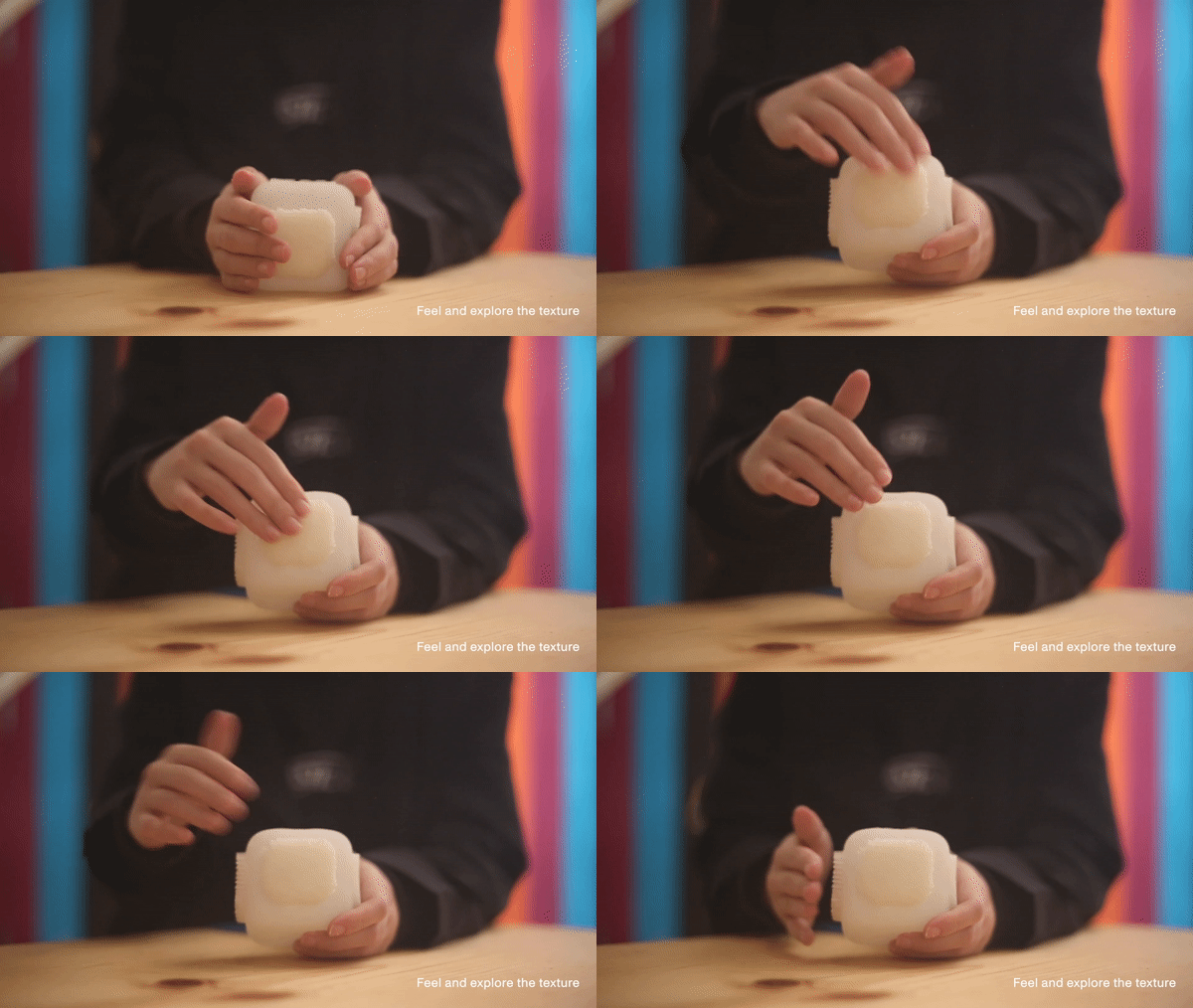
Individual Play: When the child is in a moment of duress, they can feel the textures and mimic the rhythm of the light with their breathing.
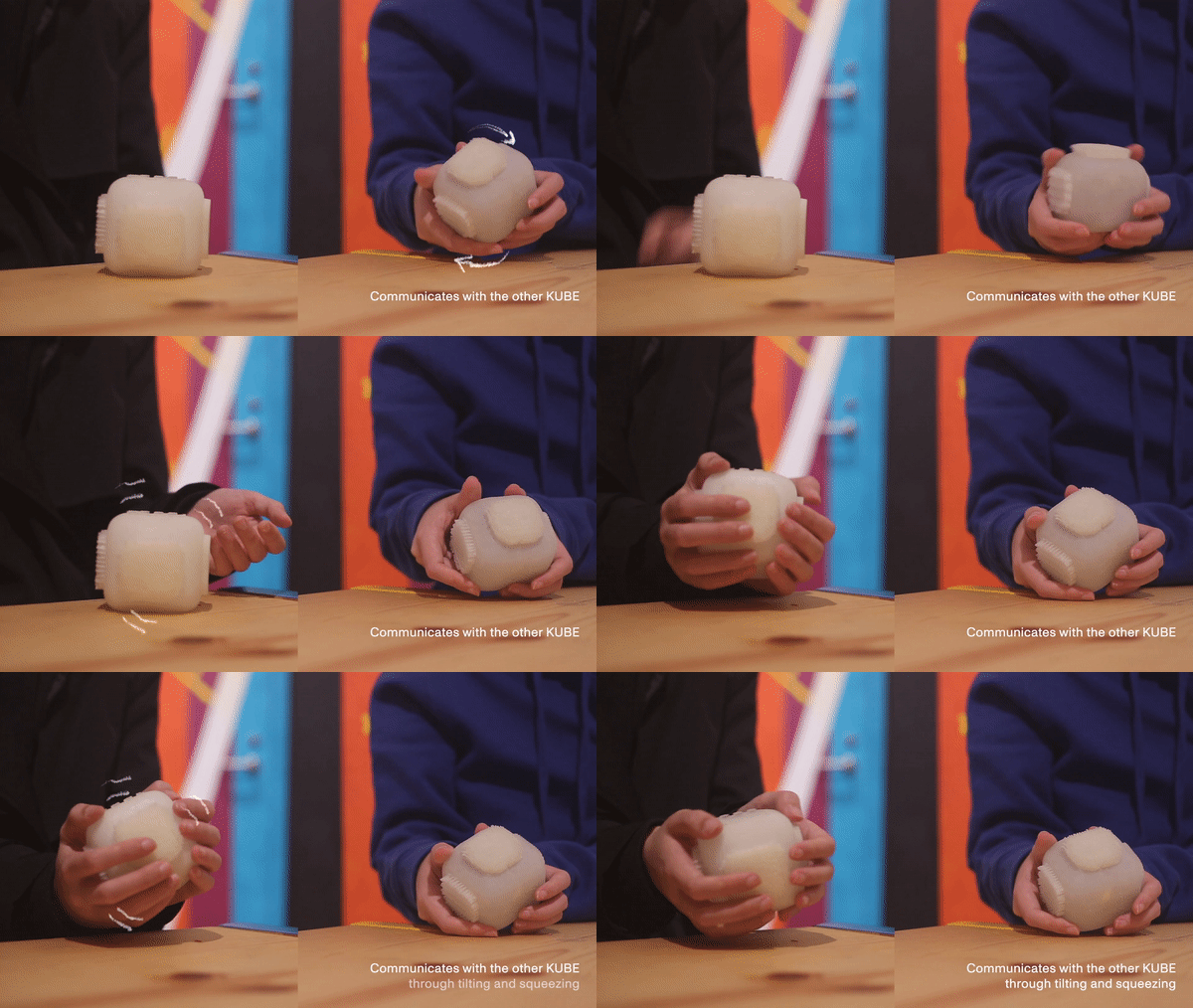
Cooperative Play: When each child holds the cube, tilting or shaking one cube will make another one vibrate; squeezing one will make the other light up accordingly.